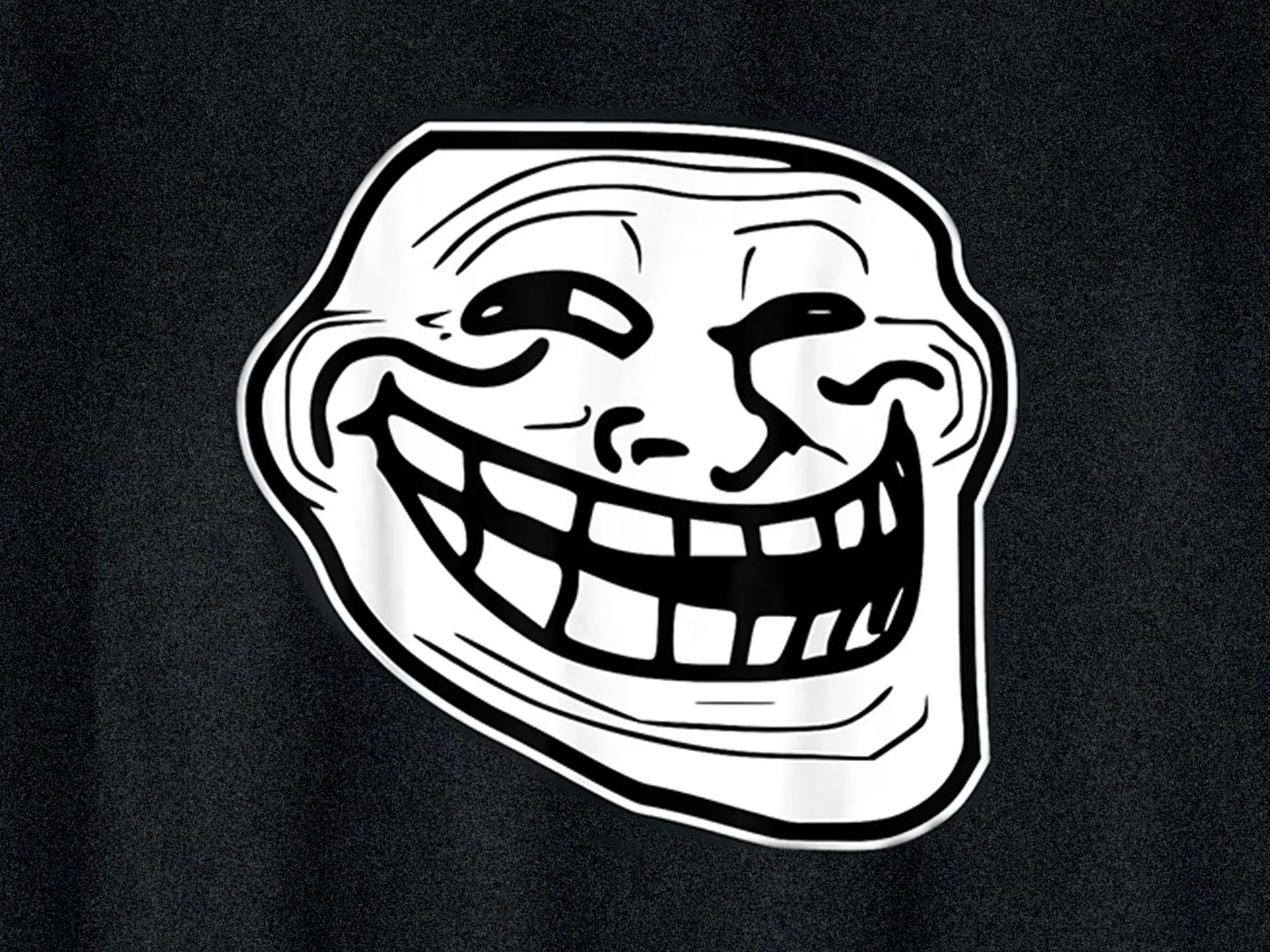
The Trollface meme is one of the defining images of early internet culture. The huge grin, narrowed eyes, and deliberately smug expression became visual shorthand for one thing: somebody is trolling.
Long before reaction GIFs filled social media feeds, Trollface could end an argument, reveal a prank, or tell everyone that someone had deliberately caused chaos just for the reaction.
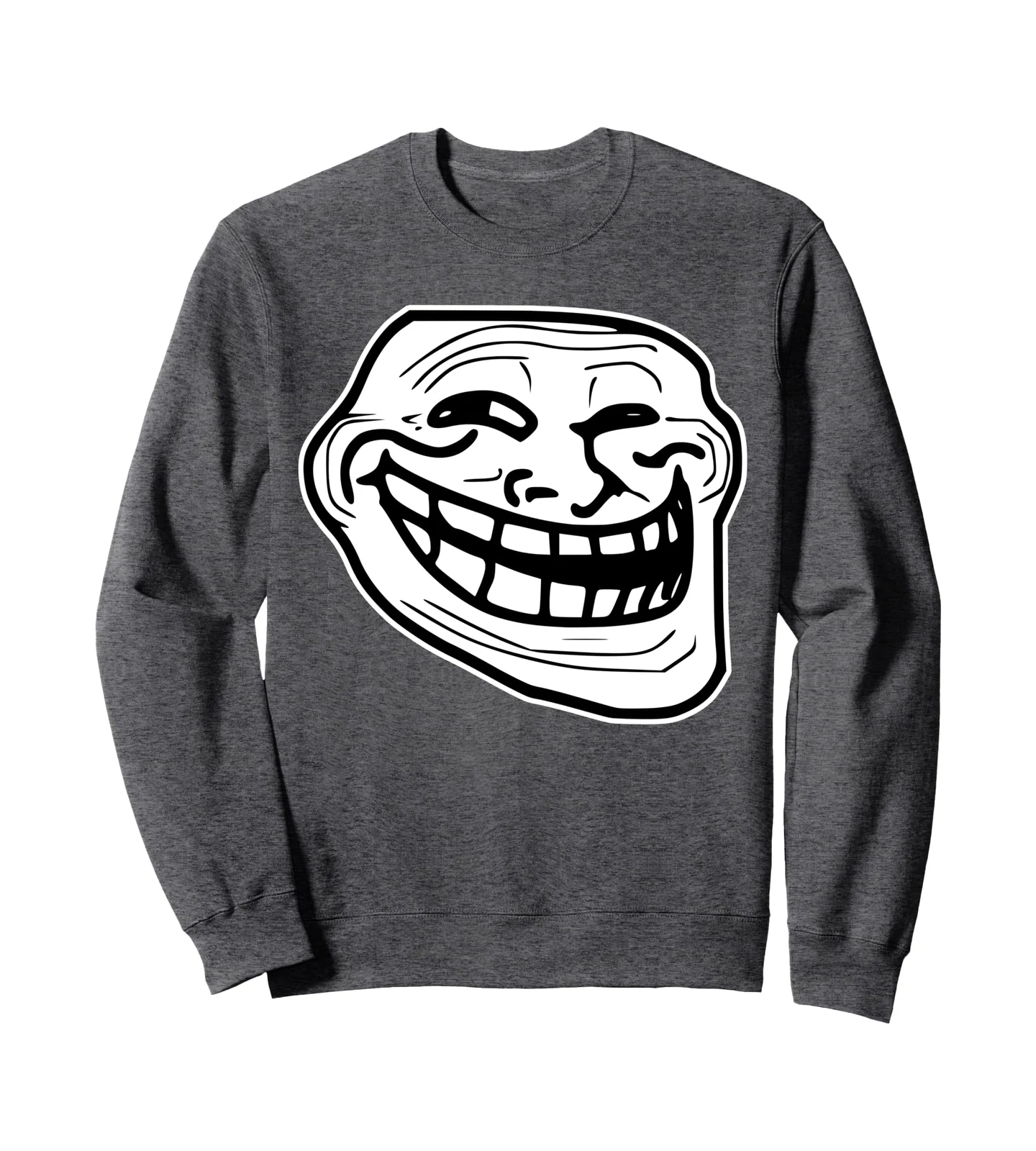
The image became especially associated with Rage Comics, 4chan, Reddit, forums, and the internet humor of the late 2000s and early 2010s. Today, the Trolling Face Meme shirt turns that familiar grin into a throwback to one of the web’s most recognizable reaction faces.
What Does the Trollface Meme Mean?
The Trollface meme represents trolling: deliberately provoking, annoying, misleading, or baiting someone online for amusement.
The grin is the important part. Trollface does not look angry or embarrassed. Instead, he looks extremely pleased with himself, as if he already knows that somebody else has fallen for the joke.
That made the image useful as a visual punchline. A comic could show someone setting up a prank or making an intentionally ridiculous argument, then end with Trollface to reveal that the character was never being serious.
In other words, the face says something close to: I did that on purpose, and your reaction was the point.
Who Created Trollface?
Trollface was created by artist Carlos Ramirez, who used the online name Whynne. Ramirez drew the face in MS Paint as part of a short comic about internet trolling.
He uploaded that comic to DeviantArt on September 19, 2008. The documented history of Trollface identifies that post as the origin of the famous drawing.
The comic specifically dealt with trolling on 4chan’s /v/ video game board. Therefore, Trollface did not begin as a generic smiling character that people later connected with trolls. Trolling was part of the idea from the beginning.
What started as one crude MS Paint drawing soon became far larger than the original comic.
How Trollface Spread Across the Internet
After the 2008 upload, the face quickly spread through 4chan. Users began reusing it in new comics and discussions because the expression communicated trolling without needing much explanation.
For a short period, the image was also known as Coolface. However, Trollface eventually became the name that stuck.
During 2009, Reddit helped expand the audience further. Trollface became especially common as Rage Comics grew through communities such as r/f7u12.
From there, the character appeared across meme generators, forums, Tumblr, Facebook, image-sharing sites, and countless reposts. The original drawing had become a reusable piece of internet vocabulary.
What Are Rage Comics?
Rage Comics were simple webcomics made from a growing library of reusable faces. Instead of drawing new characters for every story, internet users could choose an established face to represent a specific emotion or reaction.
One face represented overwhelming anger. Another showed awkward satisfaction. Others communicated confusion, embarrassment, disbelief, or smugness.
Trollface filled a particularly useful role: the troll.
The history of Rage Comics places Trollface among the important faces that emerged during the format’s earliest years. As Rage Comics became more popular, the grin became increasingly difficult to separate from the concept of internet trolling itself.
Why the Trollface Expression Works So Well
The drawing is not subtle. That is one reason it works.
The smile stretches unnaturally across the face. The eyes look smug, and the entire expression suggests someone enjoying a joke that another person has not yet understood.
Because the emotion is exaggerated, viewers can understand it almost instantly. Trollface does not need a detailed illustration or a long caption to communicate intent.
That simplicity also made the image easy to remix. Users could paste the face onto characters, photographs, drawings, game screenshots, or other memes and immediately change the tone of the image.
Once Trollface appeared, the viewer knew that some form of deliberate mischief was involved.
Why Trollface Became the Face of Internet Trolling
Internet trolls existed before Trollface. The drawing did not invent trolling, and online communities had already been using the word for years.
What Trollface did was give the behavior a face.
Trolling often depends on ambiguity. Someone posts something ridiculous, another person becomes angry, and only later does it become obvious that the original poster wanted that reaction all along.
Trollface removes the ambiguity.
Once that grin appears, the joke is exposed. The troll has revealed himself, and the reaction becomes part of the punchline.
That made Trollface useful far beyond Rage Comics. It could function like an emoticon, reaction image, signature, or final frame telling viewers how to interpret everything that came before it.
What Does “Problem?” Have to Do With Trollface?
Trollface also became strongly associated with short taunting captions, especially “Problem?”
The phrase fits the character because it adds one final layer of smugness. After deliberately annoying someone, Trollface effectively asks whether there is an issue, despite obviously knowing the answer.
That style of caption helped establish the character’s personality beyond the original comic. Trollface was no longer simply a drawing representing a troll. He became a recognizable character with a particular attitude.
The combination of the grin and a short sarcastic caption also made the image ideal for forums and reaction posts, where a complete Rage Comic was not necessary.
Trollface Became Bigger Than Rage Comics
Rage Comics eventually declined from their peak popularity. However, Trollface proved much harder to kill.
The character continued appearing in reaction images, edits, gaming communities, ironic memes, and nostalgic references to older internet culture.
That longevity matters because many Rage Faces became strongly tied to one specific era. Trollface could still work independently because trolling itself never disappeared.
Online platforms changed. Meme formats changed. Yet people continued provoking one another for reactions, so the basic emotion behind the face remained relevant.
Trollge and the Darker Trollface Revival
Years later, internet users began pushing Trollface in a much stranger direction.
A darker variation known as Trollge transformed the familiar mischievous face into something unsettling. Shadowed versions of Trollface appeared in creepy stories, countdown-style memes, and fictional “incident” formats.
The format gained traction around 2020 and 2021, giving the old Rage Face another life with a younger generation of meme creators. Instead of simply representing a harmless prank, the new versions often turned the familiar grin into part of absurd horror or surreal internet storytelling.
That evolution shows how flexible the original drawing became. People could recognize Trollface immediately even when the tone had changed completely.
Trollface Is Still Evolving in 2026
Trollface has even experienced another wave of attention in 2026.
A newer format known as Realistic Troll Face uses AI-generated versions of the character with a more human appearance. The format spread through TikTok and Instagram Reels after gaining wider traction in spring 2026.
The technology is new, but the recognition still depends on a drawing from 2008.
That is remarkable longevity for an internet meme. Trollface has moved from MS Paint comics to Rage Comics, reaction images, surreal horror formats, and AI-generated videos without losing the basic identity of that original grin.
The Trolling Face Meme Shirt
The Trolling Face Meme shirt keeps the design focused on the iconic face itself. That makes sense because Trollface does not need much extra explanation once someone recognizes it.
The expression already carries the reference: trolling, baiting, smug reactions, old forums, Rage Comics, and the chaotic humor of the early social web.
For people who remember that era, the image works as internet nostalgia. For newer meme fans, it connects directly with a character that keeps resurfacing in new formats.
The design also belongs naturally alongside AmazeShirt’s other Rage Meme Designs, including reaction faces that developed their own meanings during the same period.
Why the Trollface Meme Still Matters
The Trollface meme lasted because it represents more than one joke. It represents a behavior that became inseparable from online culture.
Carlos Ramirez drew the face in 2008 for a comic about trolling. Within months, other internet users had adopted it. Soon afterward, it became one of the central characters of Rage Comics and one of the web’s most recognizable reaction images.
More than seventeen years later, people are still finding new ways to use the same basic face.
The formats change. The platforms change. Sometimes the meme becomes nostalgic, sometimes creepy, and sometimes completely absurd.
But the expression still says the same thing.
Someone is trolling.
And judging by that grin, they are extremely pleased with themselves.