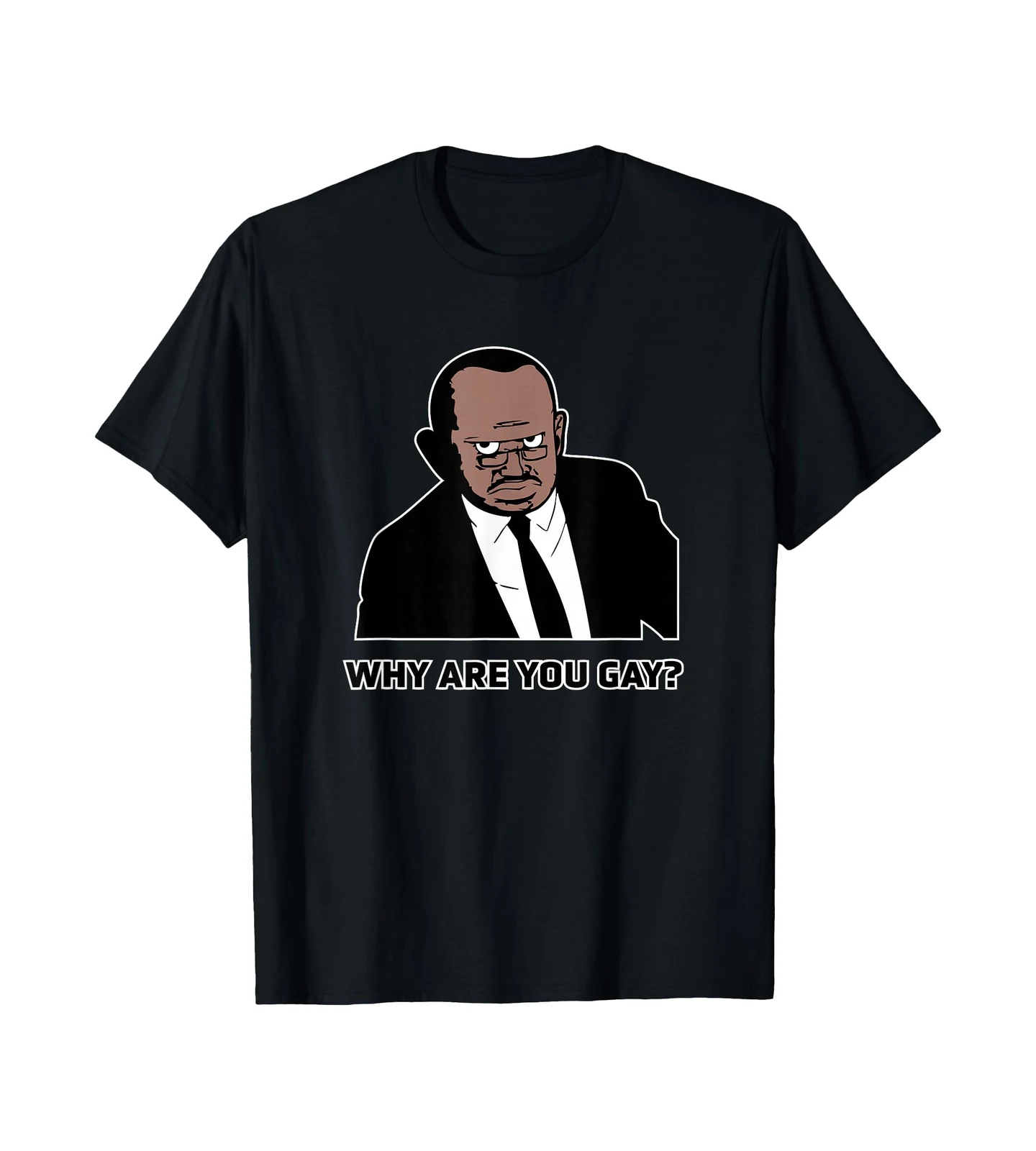
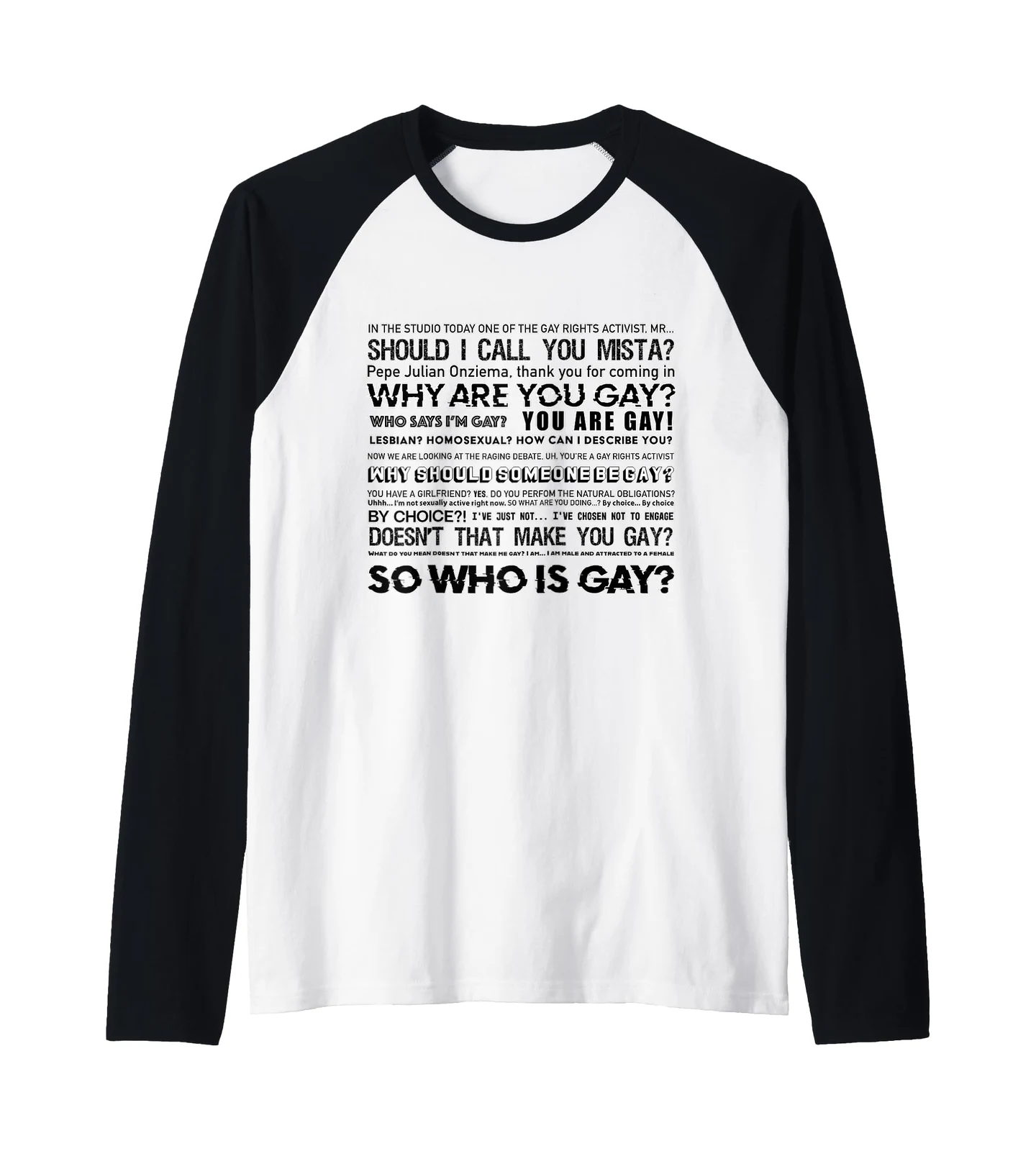
The Why Are You Gay T-shirt comes from one of the internet’s most famous interview memes. The clip is short, awkward, and easy to remember.
“Why are you gay?”
“Who says I’m gay?”
“You are gay.”
Those three lines became the core of the meme. Since then, people have reused them in videos, GIFs, reaction posts, and remixes.
However, the clip did not begin as comedy. It came from a real television interview in Uganda. So, before looking at the shirt, it helps to know the story behind the meme.
Where Did the Why Are You Gay Meme Come From?
The original clip comes from the Ugandan TV program Morning Breeze on NBS TV. The interview aired on December 18, 2012.
Journalist Simon Kaggwa Njala spoke with LGBTQ+ rights activist Pepe Julian Onziema. Soon after the interview began, Njala asked a blunt question.
“Why are you gay?”
Onziema replied, “Who says I’m gay?”
Njala then answered, “You are gay.”
Because the exchange is so direct, it feels almost scripted. Yet the interview was real and serious.
The pauses also helped the clip stand out. In addition, both men delivered the lines with complete seriousness. As a result, the scene had an unusual rhythm that worked well online.
Who Are Simon Kaggwa Njala and Pepe Julian Onziema?
Simon Kaggwa Njala is the Ugandan journalist who asked the questions. Pepe Julian Onziema is the activist who appeared as his guest.
That context matters because many reposts show only a few seconds. Therefore, new viewers may think the scene was a comedy sketch.
It was not.
Instead, the interview focused on homosexuality and LGBTQ+ rights in Uganda. At the time, those issues were part of a serious public debate.
The short meme removed most of that background. Still, knowing the source helps explain what viewers are actually watching.
For a deeper look at the meme’s history, see the Why Are You Gay meme entry.
When Did the Why Are You Gay Clip Become a Meme?
The interview first aired in 2012. However, the meme became much more visible years later.
Copies of the interview appeared online soon after the broadcast. Then, around 2019, the opening exchange gained a much larger audience.
People began turning the clip into remixes, reaction videos, GIFs, and image posts. Because the dialogue was short, users could reuse it almost anywhere.
For example, a person could post the first question as a reaction. Another user could answer with the next line. Therefore, the exchange worked even without the full video.
Soon, the three lines became recognizable on their own.
Why Did the Interview Become So Funny Online?
The meme works because of timing. First, there is almost no buildup. Njala introduces his guest and quickly asks, “Why are you gay?”
Next, Onziema answers calmly. Then Njala responds with, “You are gay.”
The whole exchange is serious. However, the rhythm feels strangely comedic when viewers see it alone.
That contrast made the clip easy to remember. It also made the audio easy to reuse.
For example, creators could place the dialogue over unrelated footage. Others could remix it with music or turn it into a reaction image.
As a result, the meme could move far beyond the original interview.
What Does Why Are You Gae Mean?
You may also see the meme written as “Why are you gae?” It refers to the same interview.
Internet users often change spelling when they copy a spoken phrase. Sometimes they write words the way they sound. Other times, they exaggerate the sound for comic effect.
Because of that, both “Why Are You Gay” and “Why Are You Gae” point to the same meme.
Another famous line is “Who says I’m gay?” That response often appears by itself.
So, if you see “Why are you gae?”, “Who says I’m gay?”, or “You are gay,” the source is usually the same clip.
The Meme Has a Serious Original Context
The viral exchange is funny to many viewers. However, the original interview covered a serious subject.
Onziema appeared on television as an LGBTQ+ rights activist. Meanwhile, Uganda faced intense debate over anti-LGBT laws and the treatment of LGBTQ+ people.
Therefore, the meme and the full interview have very different tones. The meme focuses on a few awkward seconds. By contrast, the original program dealt with a real political and social issue.
That difference does not erase the humor people found in the clip. Instead, it gives the meme useful context.
Over time, internet culture separated the quote from the longer discussion. As a result, many people now know the joke without knowing its source.
How People Use the Why Are You Gay Meme
Today, people often use the clip as a reaction. For example, someone may post “Why are you gay?” after a friend says something unexpected. Others may recreate the full exchange in comments or videos.
Sometimes the joke has almost nothing to do with the original topic. That is common with old internet memes.
Once a phrase becomes familiar, people start using it in new situations. Therefore, the quote becomes part of online language.
The dialogue is especially easy to repeat because it has a clear rhythm.
“Why are you gay?”
“Who says I’m gay?”
“You are gay.”
If you know the meme, you can probably hear the voices while reading those lines.
The Why Are You Gay T-Shirt
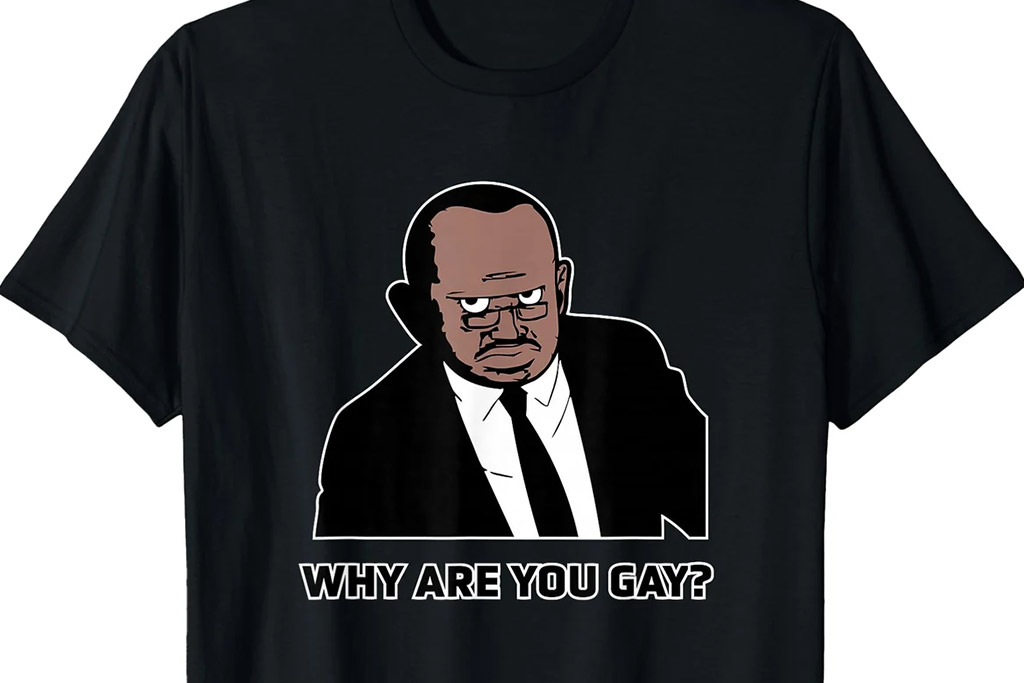
The Why Are You Gay T-shirt turns the famous interview into a graphic meme reference.
The design does not use the phrase as a random question. Instead, it points back to the Simon Kaggwa Njala and Pepe Julian Onziema exchange.
That connection is important. Because the source is specific, the shirt works best as a reference to the viral clip.
People who know the meme can recognize it at once. Meanwhile, people who do not know it may simply see a strange question.
That split is part of the appeal of many meme shirts. The joke works as a small signal between people who know the same piece of internet culture.
AmazeShirt also collects more meme and internet-culture shirts based on viral clips, quotes, reaction images, and online jokes.
Why the Meme Is Still Recognizable
The internet creates new memes every day. Most disappear quickly.
The Why Are You Gay meme lasted because the exchange is simple and easy to quote. In addition, each line leads naturally to the next one.
The clip also has strong timing. Because of that, people can reuse it without much setup.
More than a decade after the interview aired, the dialogue still works as an internet reference.
Finally, that may be the best test of a lasting meme. You only need a few words to bring the whole scene back.
“Why are you gay?”
“Who says I’m gay?”
“You are gay.”