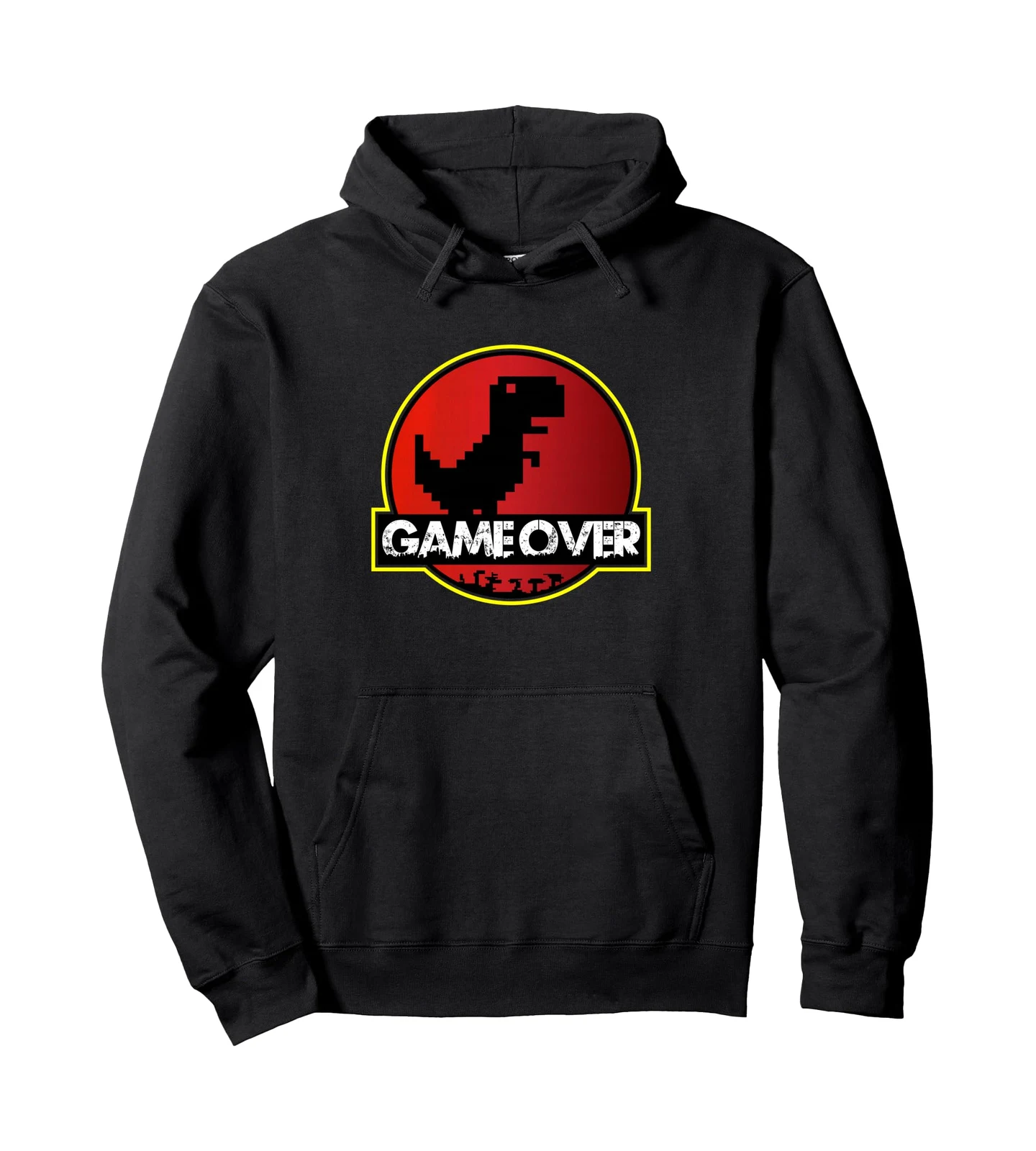
GAME OVER.
Few phrases in gaming communicate failure more efficiently.
No long explanation is necessary. The character is dead, the lives are gone, the run has ended, or the machine has decided that you have used enough quarters for now.
For decades, those two words have appeared after everything from lost arcade battles to failed platforming runs. Eventually, Game Over became recognizable far beyond video games themselves.
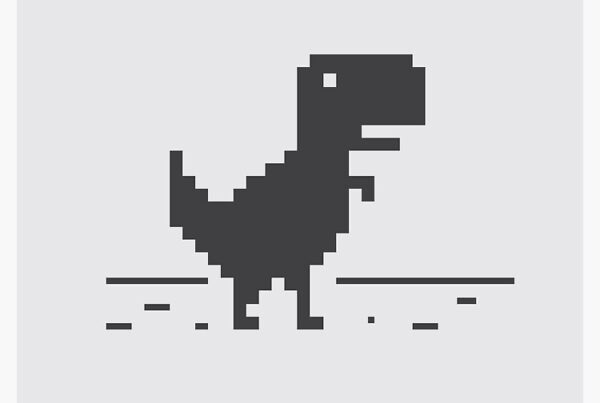
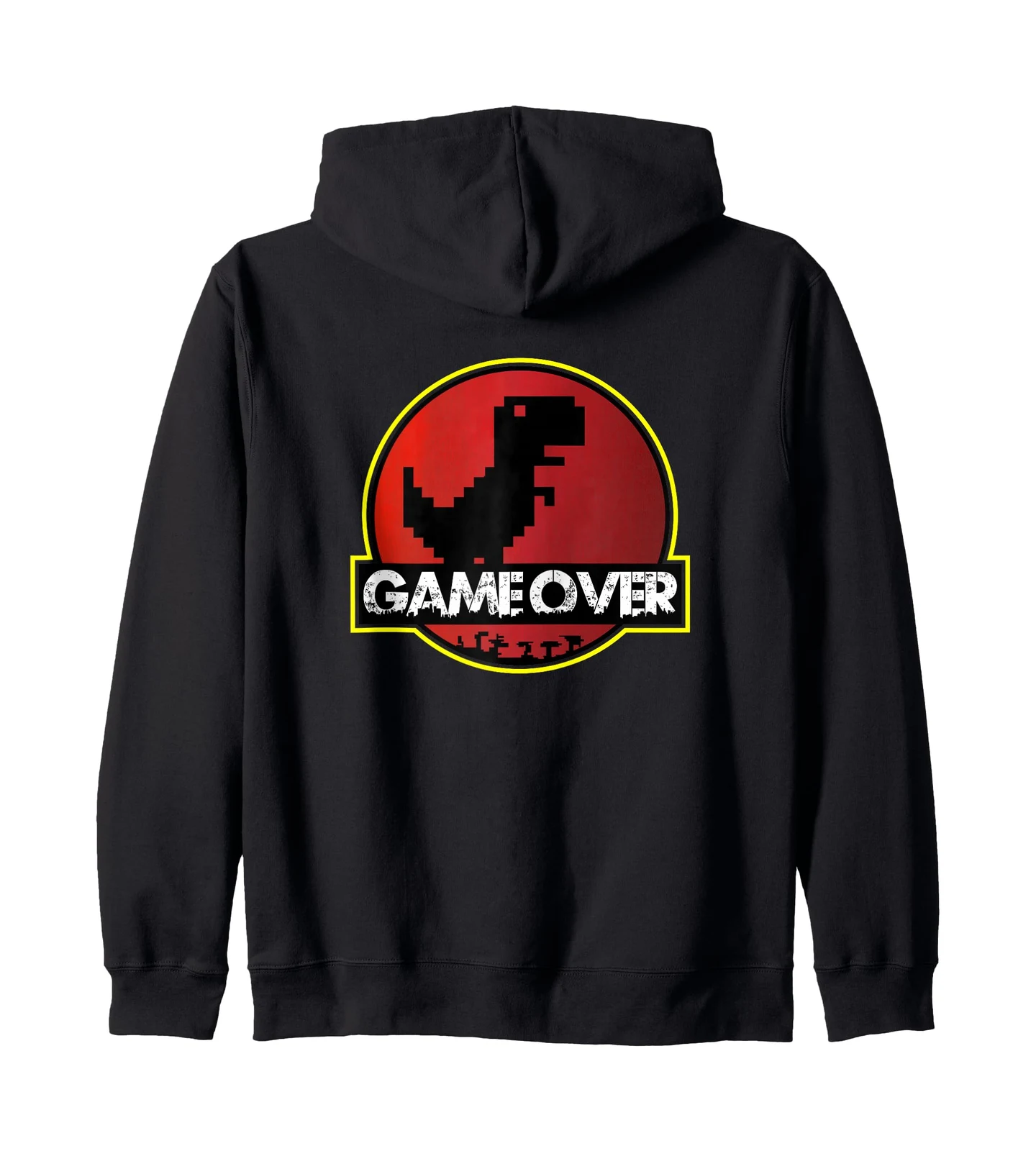
The Game Over design combines that familiar retro-gaming message with a pixel-style dinosaur and a joke about failure becoming permanently prehistoric.
What Does Game Over Mean?
In gaming, Game Over tells the player that the current game, attempt, or run has ended.
Traditionally, the message appears after the player loses all available lives, fails an essential objective, runs out of time, or otherwise reaches a condition from which normal play cannot continue.
Depending on the game, the next step might be restarting, loading a save, inserting another coin, choosing “Continue,” or returning to the title screen.
The message itself remains beautifully simple.
The game is over.
Game Over Is Older Than Video Games
The phrase did not begin with home consoles.
Versions of Game Over appeared on electromechanical amusement machines before modern video games existed. Historical documentation places the phrase on pinball-style machines by at least 1950.
These machines could illuminate the words with a lamp when play ended.
Therefore, when electronic arcade games arrived, the phrase already made perfect sense as a way to tell players that their turn had finished.
Arcades Made Game Over Famous
The phrase became especially important during the arcade era.
Arcade machines needed a clear way to separate active play from the moment when the player’s paid attempt ended.
Players usually received a limited number of lives. Once those lives disappeared, the machine stopped the current run and invited the next attempt.
In practical terms, Game Over often carried another message:
If you want to keep playing, you may need another coin.
Space Invaders Helped Define the Classic Game Over
Space Invaders, released in 1978, became one of the most influential games of the arcade era.
The player controls a defensive cannon while rows of alien invaders move downward across the screen.
If the player loses all available lives or allows the invaders to reach the bottom, the attempt ends.
The game’s prominent Game Over message helped reinforce a structure that became familiar throughout arcade gaming: limited lives, escalating difficulty, eventual defeat, and another opportunity to start again.
Game Over Was Not Always the Same as Losing
Today, players usually associate Game Over with failure.
Historically, however, the phrase could simply mean that play had ended. Some early machines used it regardless of whether the player had succeeded or failed.
Arcade cabinets could even display Game Over while nobody was actively playing.
Over time, video games developed more elaborate victory screens, endings, credits, and completion messages. As a result, Game Over became more strongly associated with unsuccessful attempts.
Limited Lives Made the Message Matter
Older games often treated failure much more harshly than modern titles.
A player might begin with three lives. Lose them all, and the game could send them back to the beginning.
That structure made every mistake more important.
Reaching a Game Over screen after twenty minutes of careful progress could mean losing almost everything you had accomplished.
Consequently, the words carried considerably more emotional weight than a modern checkpoint restart.
Then Came the Continue Screen
Arcade games eventually added another famous question after Game Over:
CONTINUE?
A countdown might begin while the machine waited for another coin.
This changed the psychology of failure. The run had technically ended, but the player received an opportunity to buy their way back into the action.
Home games later borrowed the same idea without always requiring real money. Players could choose to continue, use passwords, reload saves, or restart from checkpoints.
Still, Game Over remained the dramatic punctuation mark.
Why Game Over Screens Became Less Common
Modern game design often tries to keep players moving.
Autosaves, checkpoints, unlimited retries, and quick respawns mean that death no longer needs to stop the entire game.
Instead of displaying a traditional Game Over screen, a game may immediately reload the last checkpoint or simply return the player to the action.
Some titles replace the phrase with messages such as “You Died,” “Wasted,” or other wording specific to the game.
However, the concept remains understandable even when the exact words disappear.
Game Over Became Everyday Language
The phrase eventually escaped gaming.
People now say “game over” whenever a situation appears decisively finished.
A team becomes impossible to catch.
An argument receives a devastating final response.
A plan fails beyond recovery.
Someone makes one mistake with consequences that cannot be undone.
In each case, the phrase borrows the finality of the old video-game screen.
Why Pixel Art Fits Game Over So Well
The phrase remains strongly associated with retro gaming, so pixel art feels natural beside it.
Early game graphics worked within severe technical limits. Characters, enemies, objects, and text all had to communicate clearly with relatively simple shapes.
Today, those limitations have become an intentional visual style.
Pixel art instantly suggests arcades, early consoles, old computer games, and the era when a Game Over screen could erase an entire afternoon of progress.
Dinosaurs Make the Joke Even More Final
The Game Over shirt adds a pixel-style dinosaur to the classic phrase.
That gives the design an extra layer of dark humor.
For an ordinary video-game character, Game Over may mean restarting from the last checkpoint.
For the dinosaurs, the situation was somewhat more permanent.
There is no continue screen after extinction.
This Is Different From the Chrome Dino
The pixel dinosaur may remind some viewers of Google’s offline Chrome game, but this design works as a broader retro-gaming joke rather than a direct reference to the Chrome Dino.
The emphasis is on the classic Game Over message, pixel aesthetics, and prehistoric failure.
That also keeps it distinct from AmazeShirt’s No Internet, Try Paying Your Bill design, which specifically parodies Chrome’s offline dinosaur screen.
The Game Over Shirt
The Game Over shirt combines arcade nostalgia with dinosaur humor in a deliberately simple concept.
Gamers recognize the final-screen language immediately. Meanwhile, the prehistoric imagery turns extinction itself into the ultimate failed playthrough.
The design fits naturally among AmazeShirt’s Viral Meme Designs and retro gaming references.
Two Words That Never Needed an Upgrade
Games have changed enormously since electromechanical machines and early arcades.
Graphics became realistic. Worlds became enormous. Saving became automatic. Online games sometimes continue indefinitely.
Yet two extremely old words still communicate the end instantly.
No explanation required.
No tutorial needed.
No additional lives remaining.
GAME OVER.