
The Chrome dinosaur game has turned one of the most annoying moments online into something strangely familiar.
Your connection disappears, the page refuses to load, and a tiny pixelated T-Rex appears on the screen. Normally, Chrome offers troubleshooting advice. The No Internet, Try Paying Your Bill design adds one considerably less polite suggestion: perhaps the problem is not the router at all.
Maybe you should try paying your internet bill.
The joke works because the Chrome Dino has become almost as recognizable as the connection error itself. However, the dinosaur was not originally created as a meme. Google deliberately built it into Chrome as a hidden game for people stuck offline.
What Is the Chrome Dinosaur Game?
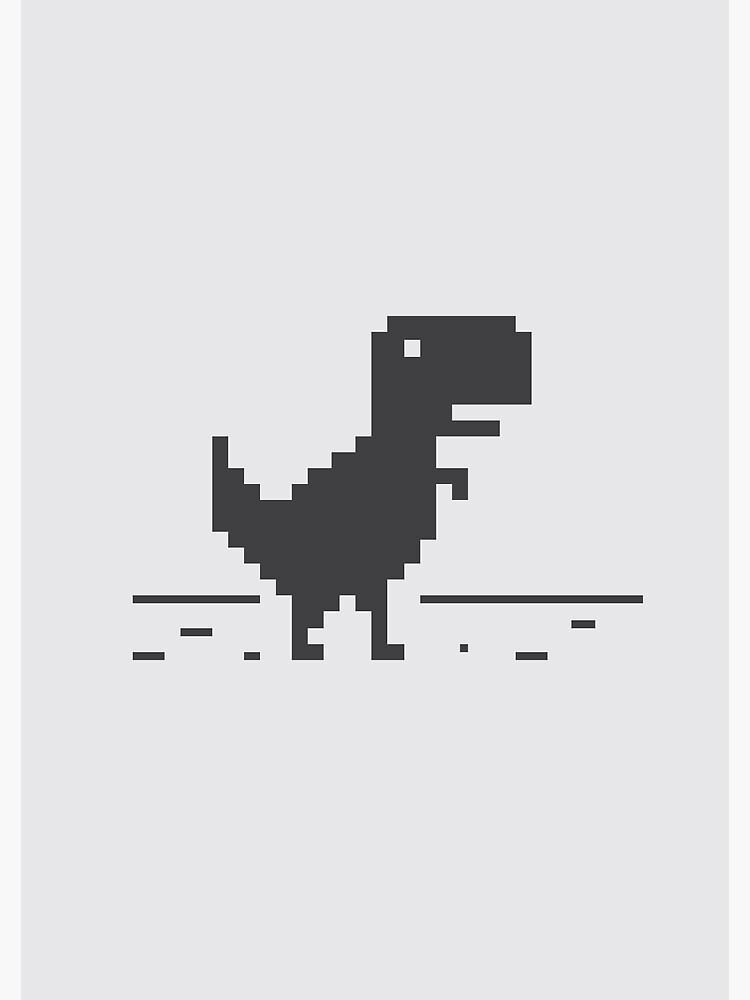
The Chrome dinosaur game is an endless runner hidden inside Google Chrome’s offline error page. When Chrome cannot reach the internet, users may see a small pixel-art Tyrannosaurus rex above the connection error message.
Press the spacebar on a computer, and the dinosaur starts running. On mobile devices, a tap does the same thing. From there, the player jumps over cacti and later avoids flying obstacles while the game gradually becomes faster.
Instead of leaving users with nothing but a failed webpage, Chrome gives them something to do until the connection returns.
Why Does Chrome Show a Dinosaur When There Is No Internet?
The dinosaur is itself a joke about being offline.
According to Google’s Chrome team, designer Sebastien Gabriel described the concept as returning to the “prehistoric age” when there was no Wi-Fi. Therefore, a T-Rex became the perfect mascot for losing your modern internet connection.
The desert, cacti, and simple pixel art extended the same idea. Rather than making the offline page look modern and sophisticated, the designers intentionally sent users backward in technological time.
That visual joke became the foundation for one of the most recognizable browser Easter eggs ever made.
The Chrome Dino Started in 2014
Google’s Chrome team developed the game in early 2014. The team included Chrome UX designers Sebastien Gabriel and Alan Bettes along with Edward Jung.
The game first appeared in September 2014 as part of a redesign of Chrome’s offline page. However, the first version did not perform well on some older Android devices.
As a result, the team rewrote parts of the game. By December 2014, the Chrome Dino worked across the platforms Google wanted to support.
What started as a tiny browser Easter egg quickly became something users deliberately looked for.
The Project Had a Rock-Music Codename
While Google developed the game, the team called it Project Bolan.
The name refers to Marc Bolan, singer and guitarist of the British rock band T. Rex. Therefore, even the internal project name contained another dinosaur joke.
Google’s designers also considered giving the T-Rex more personality. Early ideas included a roar and even a little kick inspired by classic video-game characters.
Eventually, however, they stripped the concept back to the basics. The dinosaur runs, jumps, and ducks. That simplicity became part of its charm.
Why Is the Chrome Dinosaur Game So Simple?
The game needed to work in one very specific situation: when the internet does not.
Therefore, Chrome could not rely on downloading elaborate graphics, online assets, or complicated resources after the connection had already failed. The necessary elements had to live inside the browser itself.
The simple pixel style also matches Chrome’s older error illustrations. Meanwhile, the limited controls make the game understandable almost instantly.
You do not need instructions, an account, a tutorial, or a download. You press a button and start running.
What Happens in the Chrome Dino Game?
The basic objective is survival.
The T-Rex automatically runs across a desert while obstacles approach from the right side of the screen. At first, players mainly jump over cacti. Later, flying pterodactyl-like creatures add another obstacle.
As the score increases, the game becomes faster. Day can also shift into a darker night-style display, adding visual variation without changing the basic goal.
Eventually, almost everyone makes a mistake. The dinosaur collides with something, the run ends, and the player gets a score.
Then, naturally, you try again instead of checking whether the Wi-Fi has returned.
The Offline Game Became Enormously Popular
The Chrome Dino became much bigger than Google originally expected.
By 2018, Google said users were playing roughly 270 million Dino games every month across desktop and mobile devices. In fact, the game became so distracting in some schools and workplaces that Chrome eventually gave administrators a way to disable it.
That is an impressive career for something created to make an error page slightly less unpleasant.
Google also created the internal address chrome://dino, which allows Chrome users to launch the game deliberately. Therefore, losing your internet connection is no longer required.
What Does ERR_INTERNET_DISCONNECTED Mean?
Chrome may display ERR_INTERNET_DISCONNECTED when the browser cannot establish the network connection needed to reach a webpage.
Usually, that sends people into a familiar troubleshooting routine. They check Wi-Fi, restart the router, inspect cables, reconnect the device, or blame the internet provider.
Most of the time, one of those explanations makes sense.
However, the AmazeShirt joke proposes another possibility.
Perhaps the internet provider knows exactly why your connection stopped.
Where Does “Try Paying Your Bill” Fit In?
The “Try Paying Your Bill” line is a parody of the familiar Chrome offline screen rather than an actual Chrome troubleshooting message.
The original page tries to help. By contrast, the parody loses patience.
You can restart the router. You can check the cables. You can stare at the little dinosaur as long as you want.
But if the provider disconnected the service because nobody paid the bill, no amount of technical troubleshooting will fix it.
That sudden jump from polite browser advice to financial judgment creates the joke.
Why the Chrome Dino Became a Meme
Millions of people have encountered the dinosaur under exactly the same frustrating circumstances. As a result, the image developed an emotional meaning beyond the game itself.
Seeing the T-Rex immediately suggests no internet.
That makes it useful for memes about Wi-Fi outages, bad connections, remote work, school networks, internet providers, routers, and general technical frustration.
Most importantly, nobody needs much explanation. The dinosaur already tells the story.
The Dinosaur Is a Perfect Tech-Humor Character
The Chrome Dino sits in a strange position between gaming culture and technology humor.
It is technically a game, yet most users first encounter it because something has failed. Therefore, playing it feels almost like making the best of a technical problem.
Developers, IT workers, students, gamers, and remote workers may all recognize the same sequence: internet disappears, productivity stops, dinosaur appears.
At that point, the offline screen becomes less of an error message and more of an old acquaintance.
The No Internet, Try Paying Your Bill Shirt
The No Internet, Try Paying Your Bill shirt parodies that familiar Chrome experience with a much more sarcastic troubleshooting step.
The pixel dinosaur and offline-browser layout establish the reference immediately. Meanwhile, the added billing joke gives the error a human explanation that Chrome would probably prefer not to suggest.
The design belongs naturally in AmazeShirt’s Tech & Programming collection, where browser errors, computing culture, and developer humor can become part of the joke.
From Error Page to Internet Icon
The Chrome dinosaur began as a small attempt to make losing an internet connection less irritating. Instead, it became a game played hundreds of millions of times and an instantly recognizable symbol of being offline.
Google gave users something to do while they waited for the connection to return.
The meme version simply adds one more troubleshooting possibility.
Check the Wi-Fi. Restart the router. Inspect the cables.
And if none of that works?
Try paying your bill.