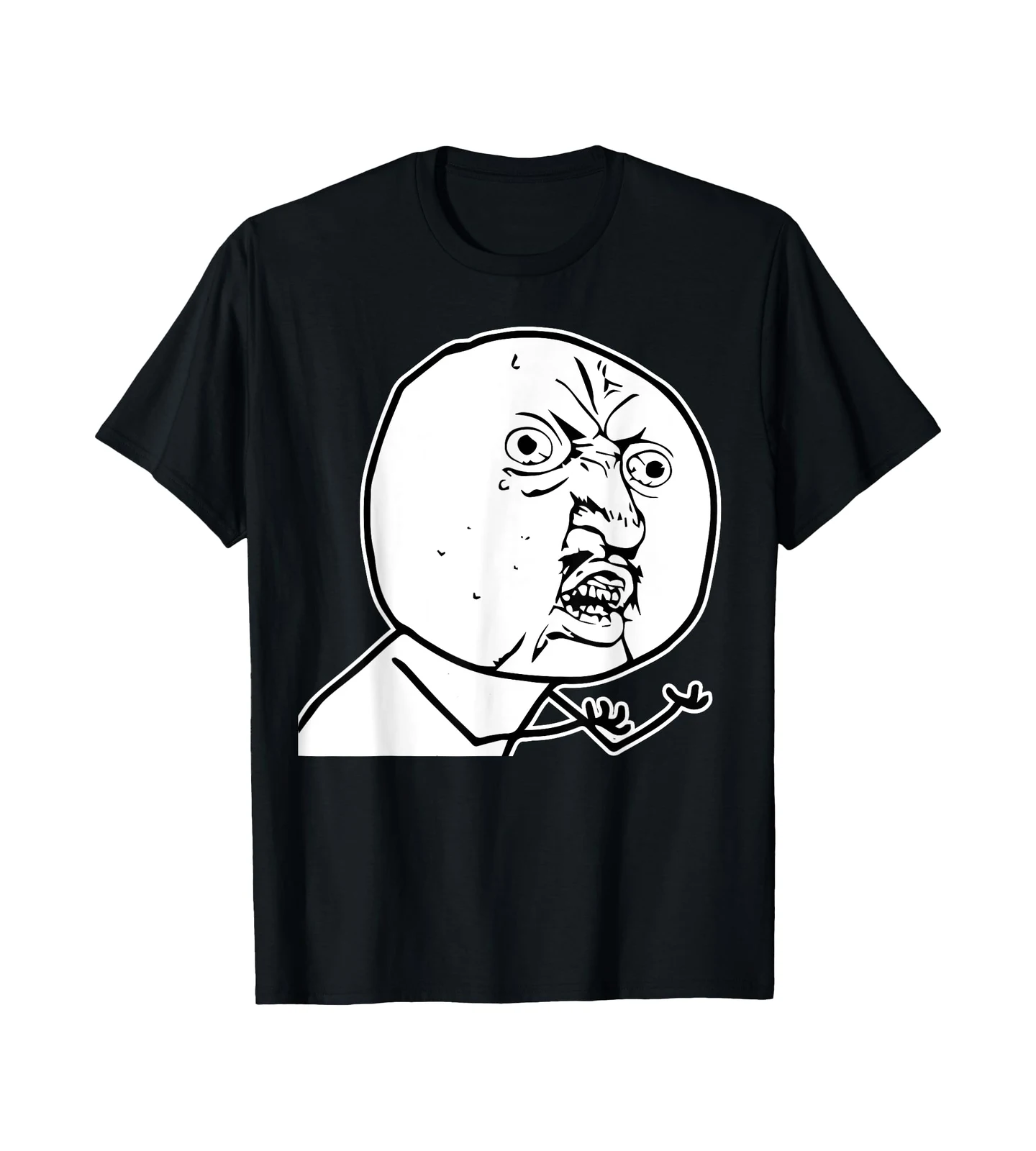
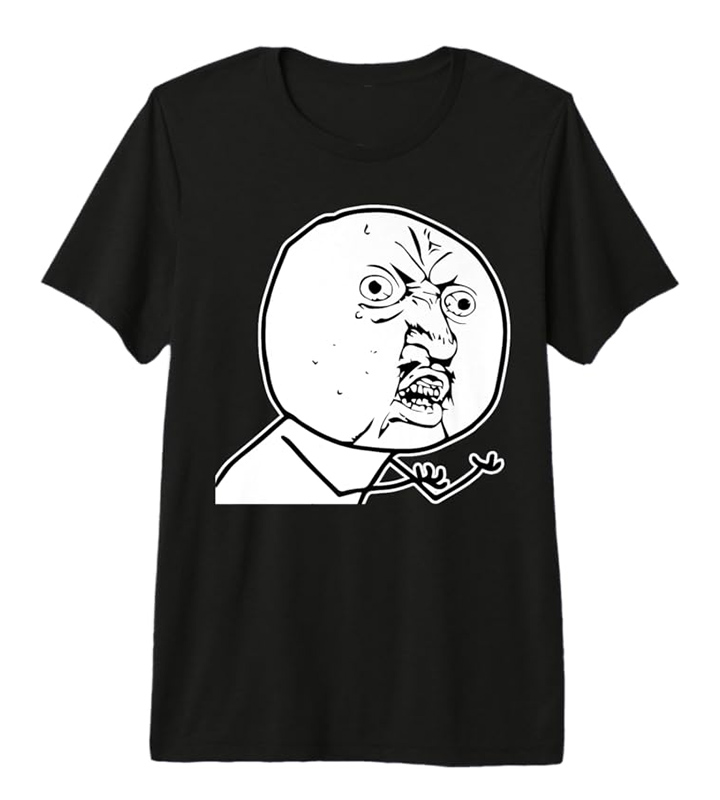
The Why Face meme belongs to the collection of exaggerated reaction characters that dominated Rage Comics during the early 2010s. The frustrated face, thin outstretched arms, and desperate expression communicate one simple question: why?
Online, the character is more commonly known as Y U NO Guy. Classic versions usually place the face beneath deliberately broken phrases such as “Y U NO…” followed by whatever person, object, website, or situation has caused the frustration.
The character behind the Why Face Meme shirt has an unexpectedly specific origin. Its famous expression can be traced back to a Japanese manga published years before Rage Comics existed.
What Is the Why Face Meme?
The Why Face is a reaction image for frustrated questioning. The character appears to be demanding an explanation while throwing both arms outward in disbelief.
That is why the face works so naturally with variations of the question “Why?” or the intentionally incorrect internet phrase “Y U NO?”
Instead of calmly asking why something happened, the character looks completely unable to understand how the situation could possibly make sense.
The Meme Is Better Known as Y U NO Guy
Although the AmazeShirt design uses the straightforward name Why Face Meme, internet meme archives generally identify this character as Y U NO Guy.
“Y U NO” is deliberately broken shorthand for something close to “Why don’t you?” The grammar is part of the joke rather than an accidental mistake.
Classic captions follow a simple formula. First, the meme identifies the subject causing the problem. Then Y U NO Guy demands that it behave differently.
A phone refuses to charge. A website stops loading. Someone ignores a message. Almost any small frustration can become a Y U NO complaint.
Where Did the Y U NO Face Come From?
The face has a much stranger origin than most people expect. It is believed to have been traced from a panel in Hiroya Oku’s science-fiction manga Gantz.
The expression appears in Chapter 55, Naked King, originally published in Japan in 2002. After an English translation appeared years later, traced versions of the unusual expression reportedly began circulating through imageboards.
So the face was not originally drawn as a Rage Comic character at all. Internet users extracted the expression from a completely different piece of media and transformed it into a reusable reaction.
How Did the “Y U NO” Format Begin?
The earliest well-documented version of the familiar caption format appeared on Tumblr. It placed the character against a simple background with a complaint about someone failing to reply to a text message.
The wording followed the recognizable structure: “I TXT U, Y U NO TXT BAK!?”
That combination of SMS-style spelling and extreme frustration gave users an obvious template. Soon, people could substitute almost any subject and complaint into the same structure.
Meme generators then made it even easier to create new versions without needing image-editing software.
Why the Bad Grammar Is Part of the Meme
Y U NO Guy would not sound the same if the captions used polished English. “Why have you not replied to my text message?” simply does not have the necessary energy.
Y U NO TXT BAK? feels more immediate, primitive, and irrational. The character looks so frustrated that complete grammar has apparently stopped being important.
This style fit perfectly with early meme culture, where deliberate misspellings, abbreviations, and broken sentence structures often became part of a character’s identity.
Why the Outstretched Arms Matter
The body language makes the Why Face especially useful. Unlike many Rage Faces that consist mainly of a head, Y U NO Guy appears to physically demand an explanation.
The thin arms stretch outward as though the character is asking the entire universe to justify itself.
That makes the reaction instantly readable. Even without a caption, the pose communicates frustration, disbelief, and questioning.
It is basically the visual form of saying: What is this? Why would you do this?
How Y U NO Joined the Rage Comic Era
By 2010, Rage Comics had developed into a large visual vocabulary. Users combined recurring faces to tell simple stories about everyday frustration, awkwardness, trolling, satisfaction, confusion, and embarrassment.
Y U NO Guy fit naturally into that system because the character represented a specific emotional job: exasperated questioning.
Instead of drawing a new frustrated character every time, comic creators could insert Y U NO Guy and immediately tell readers what the character was feeling.
That reusable language is one reason Rage Comics spread so quickly.
Why the Meme Worked Outside Rage Comics
Y U NO Guy did not require a multi-panel comic. The character worked perfectly as a standalone image macro.
Someone only needed the face, a subject, and a complaint. That made it easy to post on forums, Tumblr, Facebook, blogs, and other platforms without building an entire story around it.
The phrase itself also escaped the image. People started typing “Y U NO” in comments and messages even when the character was nowhere to be seen.
At that point, the grammar had become a meme of its own.
The Why Face Meme Shirt
The Why Face Meme shirt focuses on the character’s exaggerated expression and questioning pose.
That gives the design two recognizable identities. Someone may simply know it as the Why Face, while people familiar with early meme history will recognize the classic Y U NO Guy from the Rage Comic era.
The design belongs alongside AmazeShirt’s other Rage Meme Designs, where different faces represent their own exaggerated reactions.
Why the Why Face Still Works
The platforms that made Y U NO Guy famous have changed, and Rage Comics are no longer the dominant meme format they once were. However, the emotion behind the face has not changed at all.
Technology still fails. People still ignore messages. Websites still break. Someone will always do something that makes absolutely no sense.
When that happens, one of the internet’s oldest questions remains available:
Y U NO EXPLAIN?